
Blog
ESA Motion Blog
Practical engineering insight for DIY builders, fabricators and vehicle designers turning digital ideas into real structures.
Latest articles
Designing a Cage That Passes Tech Inspection
What gets checked beyond tube size, the wall-thickness trap, and the paperwork to have ready before you arrive.
Read article →Building a Chassis Jig: Flat, Rigid, and Sharing an Origin With Your Model
How flat is flat enough, three ways to get a surface, and why the table should share an origin with your model.
Read article →Buying Tube, and Reading a Mill Certificate
What a mill cert actually contains, keeping the chain to the cut tube intact, the ERW trap, and what to check on delivery.
Read article →Weld Distortion, and Why Build Sequence Is Not Optional
Every tube cut right and the frame still came out narrow. Where it went, and the tacking and welding order that prevents it.
Read article →Mandrel Bending, Wrinkles and Wall Thinning
The two ratios that predict a ruined bend, what a mandrel does and does not fix, and how to diagnose wrinkles and flats.
Read article →Gussets That Earn Their Weight
When a plate genuinely helps and when it is decoration, plus the failure mode that cracks the tube rather than the gusset.
Read article →Welding Tubular Joints: MIG or TIG, and Why the Rulebook Usually Decides
What each process is good at, filler choice for mild steel and 4130, the preheat argument, and what really decides weld quality.
Read article →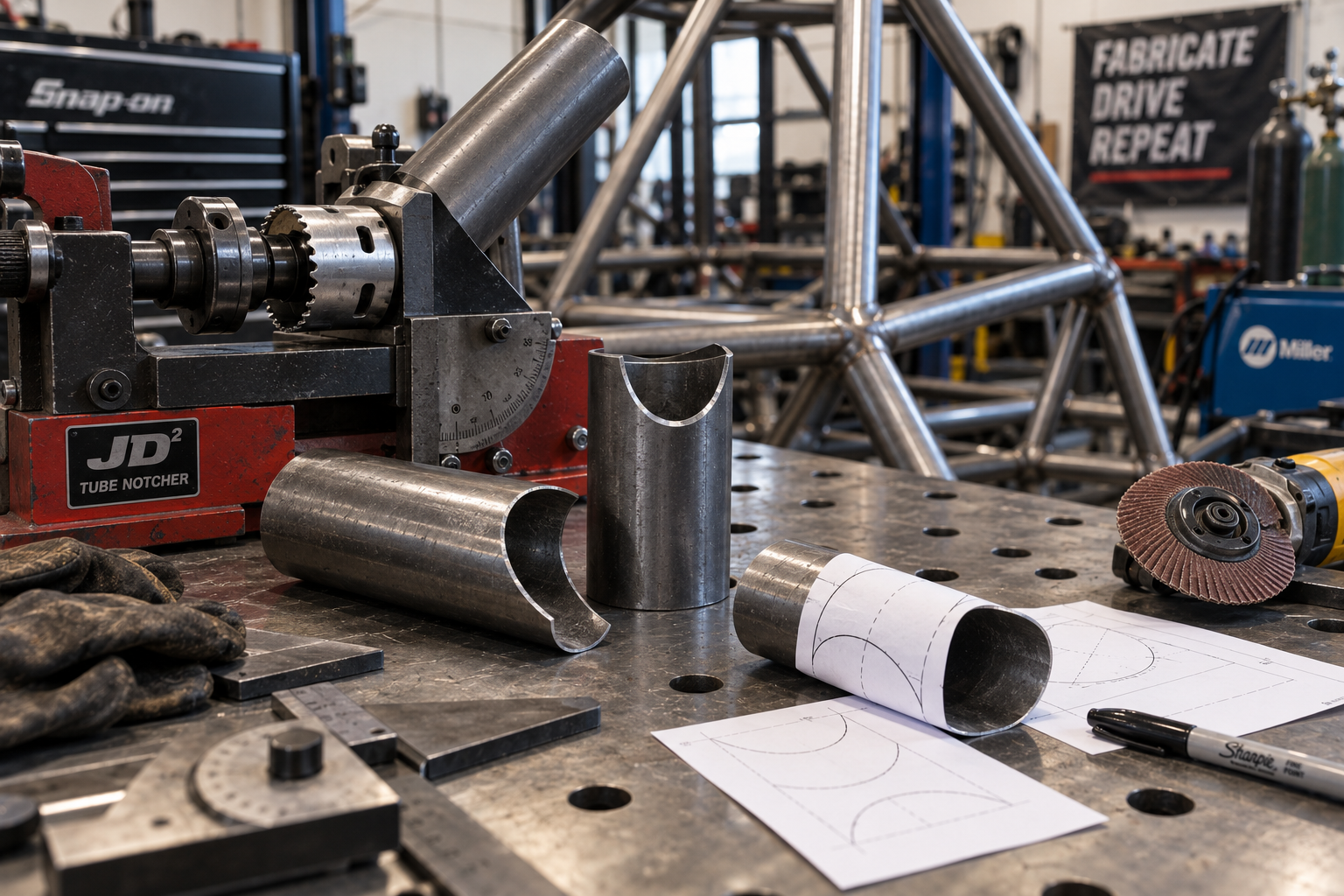
Tube Notching Methods Compared: Template, Hole Saw, Mill and Plasma
How to cut a fishmouth: paper templates and a grinder, hole-saw notchers, end mills and CNC plasma, with the accuracy and limits of each.
Read article →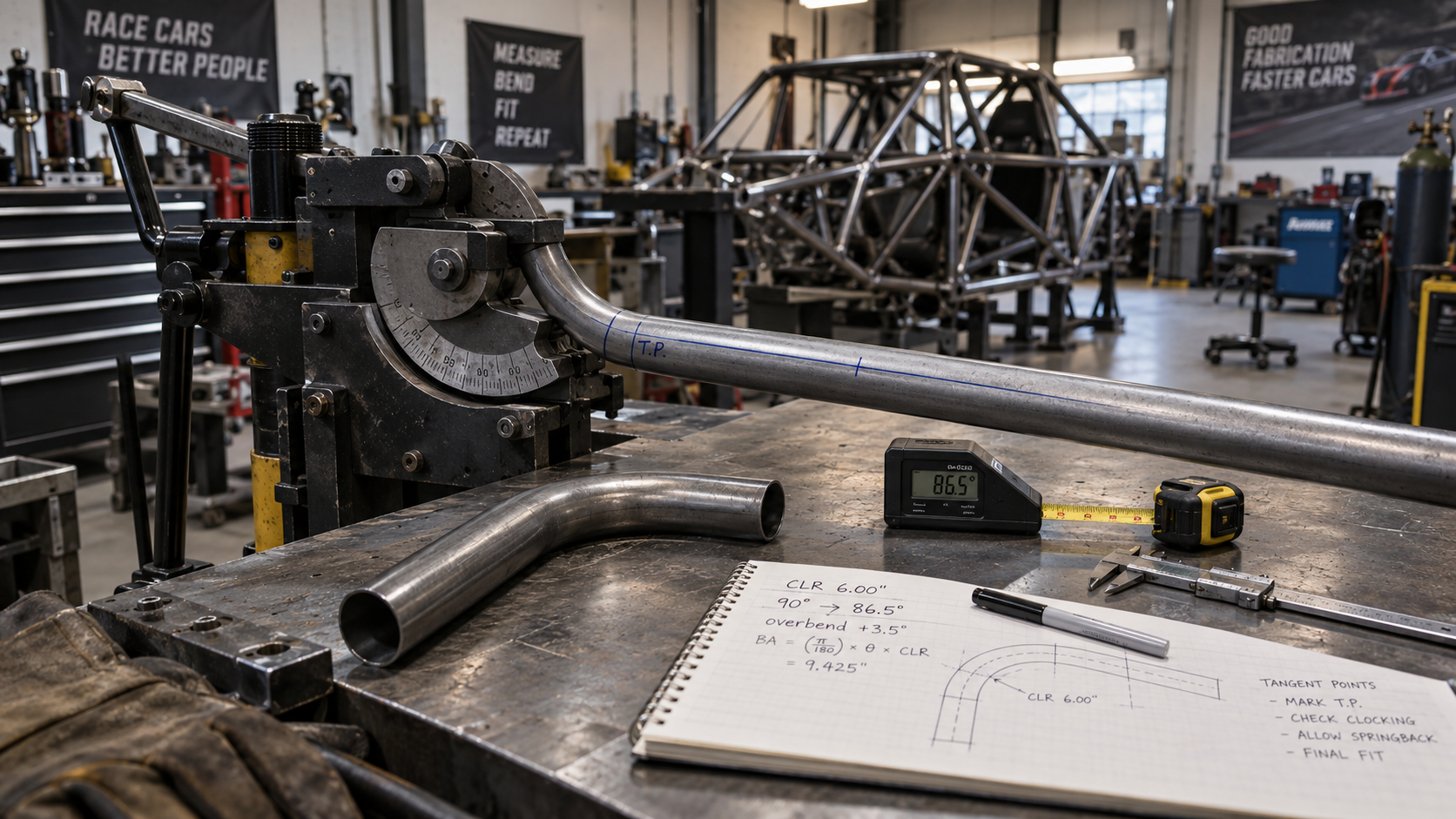
The Four Tube Bending Numbers That Decide Whether Your Part Fits
CLR, bend allowance, springback and clocking, with the formulas and the mistakes that only show up at the welding table.
Read article →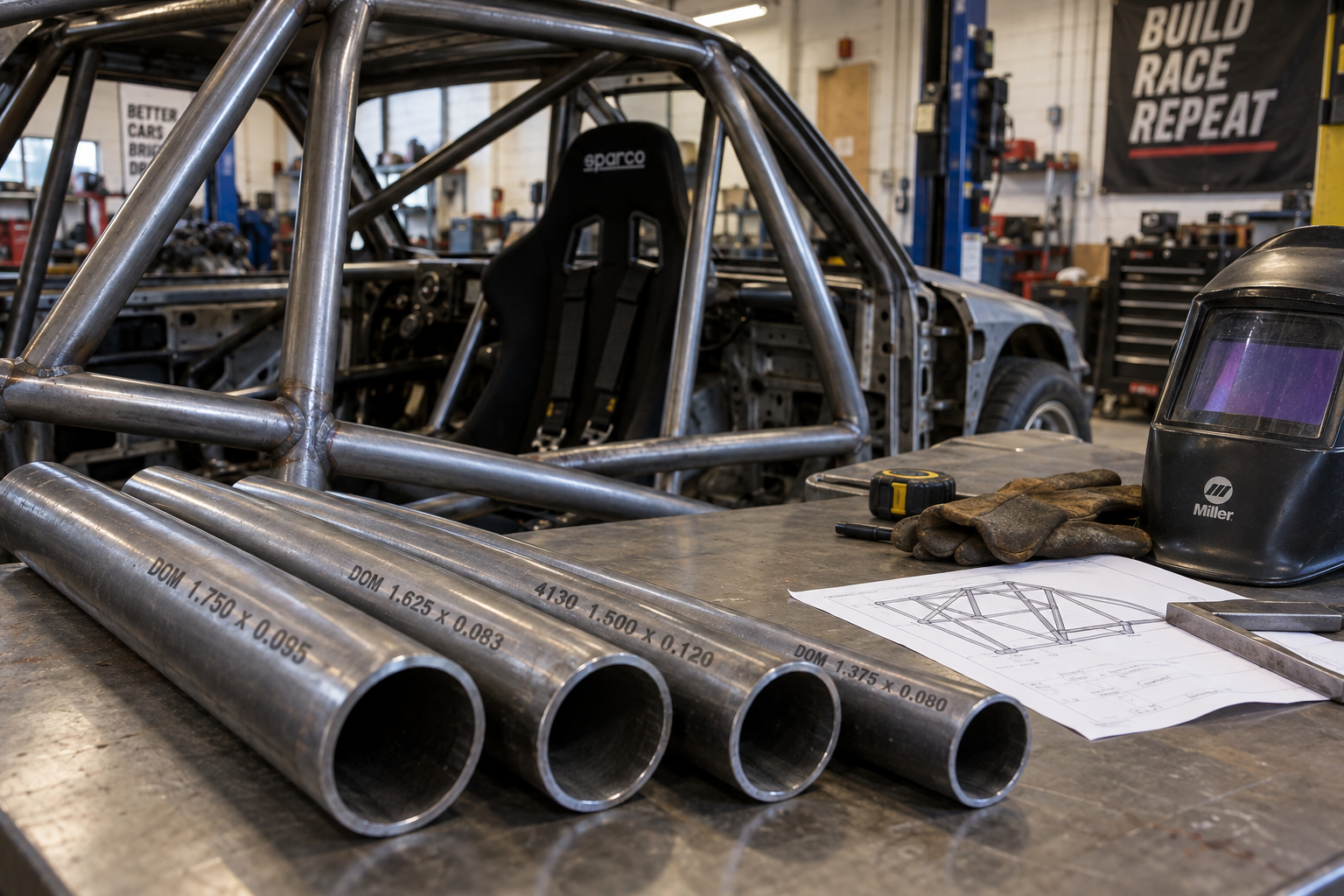
Choosing Roll Cage Tubing: DOM, Chromoly and the Rulebooks
How cage tubing is specified across sanctioning bodies, and why mild steel needs a thicker wall than chromoly.
Read article →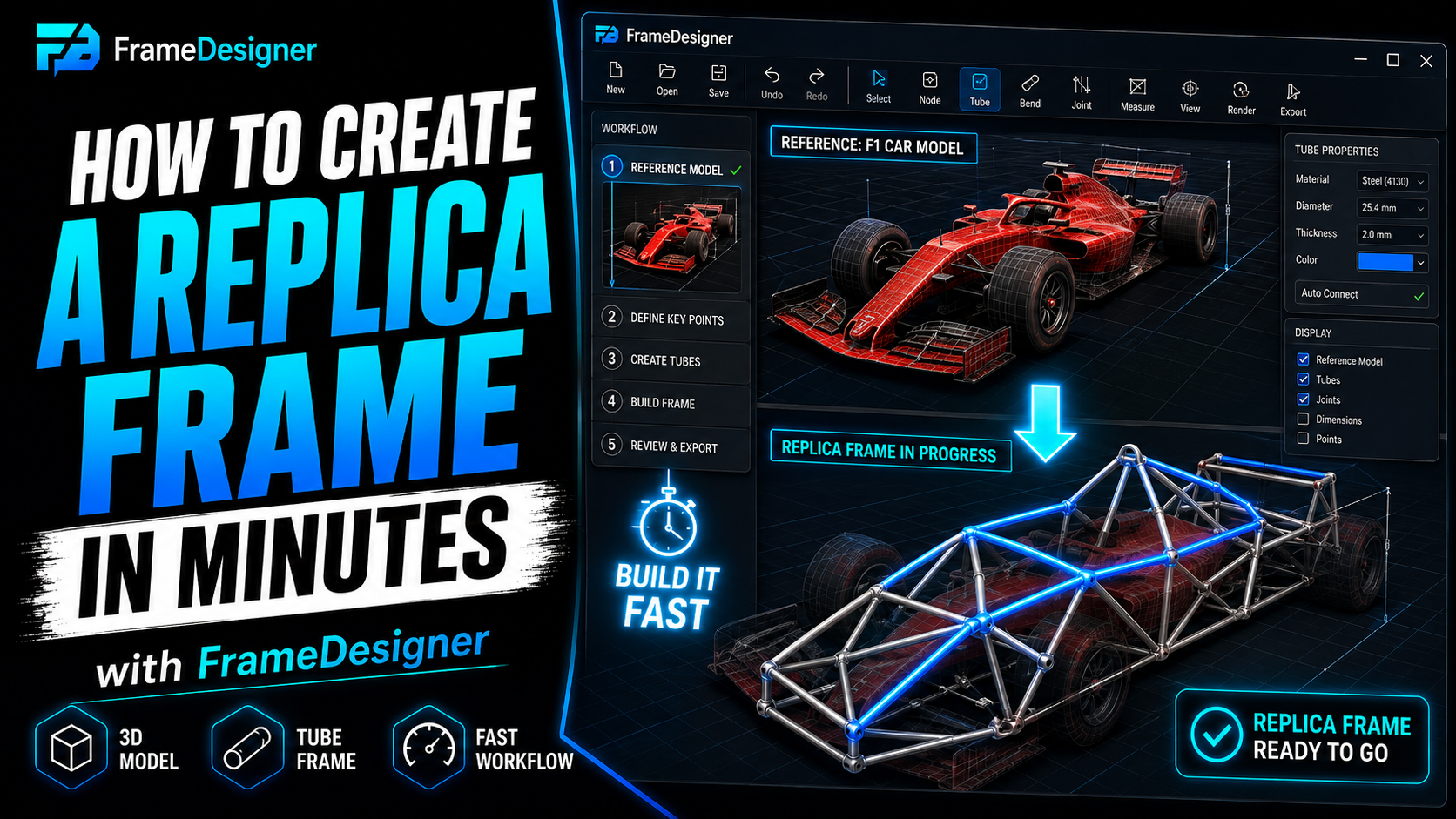
Why We Built FrameDesigner: Engineering for the DIY Builder
The gap between CAD and fabrication, and why DIY builders deserve software designed around the workbench.
Read article →